

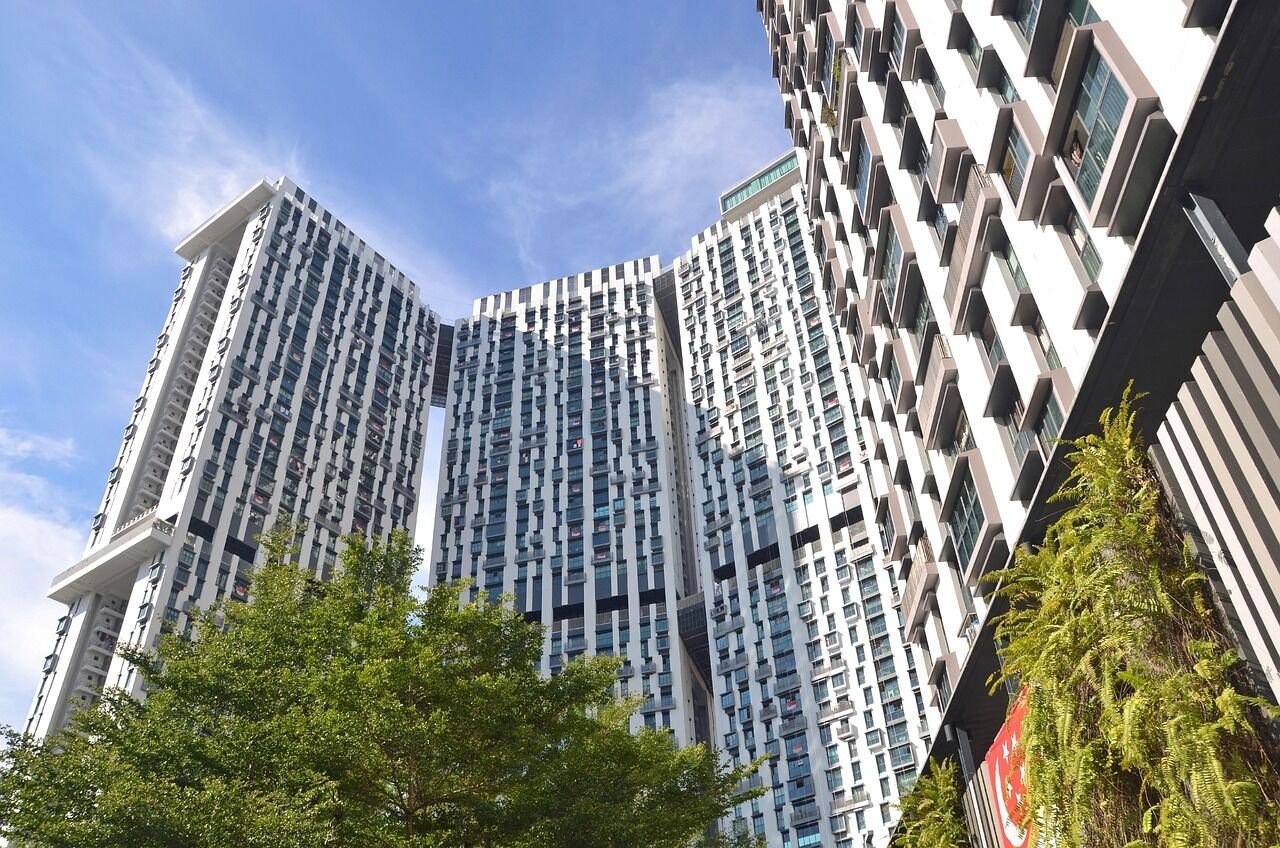
Understanding New Condominium Launches in Kuala Lumpur
Kuala Lumpur’s condominium market continues to evolve, with new launches reshaping areas from KLCC and Mont Kiara to Cheras and Setapak. For many buyers, especially investors and young professionals, new developments offer modern facilities, perceived capital appreciation potential, and more flexible payment schedules. At the same time, they come with specific risks and uncertainties that do not exist with completed, subsale units.
This article looks at how to assess new and upcoming condominium projects in Kuala Lumpur, what to watch for at the early stages, and how these options compare with existing properties in mature neighbourhoods such as Bangsar and Desa ParkCity.
Why Kuala Lumpur Continues to Attract New Condo Developments
Kuala Lumpur remains a central focus for developers due to its role as Malaysia’s main business and lifestyle hub. Areas like KLCC and Bukit Bintang attract high-density residential towers, while Mont Kiara, Bangsar, and Desa ParkCity see more lifestyle-oriented projects targeting families and expatriates. Meanwhile, Cheras and Setapak appeal to price-sensitive buyers who still want KL addresses and access to the city’s core.
Several structural factors explain the steady pipeline of launches: ongoing infrastructure improvements, gradual population growth, urbanisation, and shifts in living preferences towards security and facilities. New condominiums often cluster around MRT, LRT, or highway nodes, which can significantly influence long-term value and rental demand.
However, the volume of launches has also raised concerns about oversupply in some segments, especially high-density smaller units near the city centre. Buyers therefore need to distinguish between projects that align with real demand and those primarily driven by available land and developer timelines.
Key Market Trends in New KL Condo Launches
New launches in Kuala Lumpur tend to follow several observable trends in design, pricing, and positioning. Understanding these can help buyers filter marketing claims and focus on fundamentals.
1. Smaller Units and Higher Per-Square-Foot Prices
Many new condominiums in KLCC, Mont Kiara, and parts of Bangsar offer smaller built-up sizes, especially for 1- and 2-bedroom layouts. The total price is kept more “affordable” by reducing size, but the per-square-foot (psf) price can be significantly higher than older developments nearby. This can create a situation where monthly instalments feel manageable, but long-term value per square foot is less compelling.
In contrast, older subsale units in Setapak or Cheras may be larger but perceived as less modern. Buyers need to weigh lifestyle preferences against the economics of paying premium psf rates for compact units in new towers.
2. Emphasis on Facilities and Lifestyle Positioning
Facilities such as sky pools, co-working spaces, gymnasiums, and multi-purpose halls are now expected rather than exceptional. Developments in Desa ParkCity, for instance, compete more on community environment, greenery, and walkability rather than just the building itself. In KLCC and Mont Kiara, rooftop entertaining decks and concierge-style services are increasingly common.
While facilities add to the appeal, they also contribute to higher maintenance fees. Buyers should consider whether they will truly use the offered facilities and whether the long-term upkeep is sustainable for the target demographic.
3. Transit-Oriented and Highway-Linked Projects
New launches along MRT and LRT lines in Cheras, Setapak, and along the Sungai Buloh–Kajang (SBK) corridor are marketed as transit-oriented developments. Proximity to stations and improved connectivity to KLCC and central business districts can support both rental and resale demand, particularly for smaller units targeting commuters and students.
However, distance alone is not enough. The quality of pedestrian access, surrounding amenities, and safety between the condo and the station significantly affect real-world attractiveness. Buyers should not assume that any project within a short radius of a station will automatically enjoy strong demand.
Evaluating Early-Stage Investment Opportunities
Early-stage or pre-launch purchases can be attractive due to lower entry prices, developer rebates, and more choice of units. At the same time, these purchases carry higher uncertainty. It is crucial to adopt a structured approach to evaluation.
Key Factors to Assess Before Booking
- Location and connectivity: Distance to KLCC, access to major highways (DUKE, MRR2, Sprint), and public transport options.
- Neighbourhood maturity: Existing shops, schools, healthcare facilities, and employment centres around the site.
- Developer track record: Completion history, build quality, and how previous projects are maintained over time.
- Density and land size: Number of units per acre, number of lifts per block, and parking allocation.
- Target market: Owner-occupiers, students, expatriates, or mass-market tenants—this affects rental and resale prospects.
- Projected supply in the area: Other upcoming condos or serviced apartments along the same stretch or station.
- Holding power: Your ability to service the loan and absorb vacancy or price stagnation after completion.
Balancing Price, Location, and Timing
In core areas like KLCC and Bangsar, land is limited and prices are generally higher. New launches often position themselves at premium levels compared with completed nearby condos. Buyers should compare:
New launch: Modern layout, new facilities, and early-bird incentives, but 3–5 years before completion and higher uncertainty.
Subsale unit: Immediate visibility of build quality and actual environment, potential room for negotiation, but older design and possibly higher renovation costs.
For more emerging pockets of Cheras or Setapak, new launches may be the main way to access modern stock. Here, the key question is whether the area’s infrastructure and population base can support ongoing demand once multiple projects complete around the same time.
Comparing New Launch vs Existing (Subsale) Condominiums
Both new launches and subsale properties in Kuala Lumpur have distinct advantages and drawbacks. Treating them as competing options rather than assuming one is always better can lead to more rational decisions.
| Factor | New Launch | Subsale | Impact |
|---|---|---|---|
| Price Visibility | Based on projections; future market uncertain | Current market price, visible transaction data | Subsale offers clearer evidence of real values |
| Condition | Brand new upon completion | Wear and tear; may need renovation | New launches save on initial repairs, subsale may need cash for upgrades |
| Facilities | Modern, competitive facilities | May be older or less comprehensive | Facilities can attract tenants but raise maintenance costs |
| Timeline | 3–5 years construction period | Immediate occupancy | Investors must factor in holding time before rental income for new launches |
| Risk Level | Higher (construction, market, policy risks) | Lower (known product and area performance) | Risk tolerance should guide choice |
In mature areas like Mont Kiara and Bangsar, subsale condos sometimes trade below replacement cost (what it would cost to build a similar property now), especially older but well-located developments. In these locations, the “newness premium” for launches needs to be carefully tested against realistic exit prices.
Risks of Buying Early-Stage Projects
Early-stage purchases in Kuala Lumpur bring specific categories of risk, particularly when buying from plans or show units alone.
1. Construction and Delivery Risk
Although most reputable developers in KL complete their projects, delays are not uncommon. Changes in construction costs, contractor issues, or slower sales uptake can affect completion timelines. In more challenging market conditions, some projects may be redesigned, scaled down, or delayed significantly.
Buyers should review the Schedule of Completion in the Sale and Purchase Agreement (SPA), be aware of late delivery compensation clauses, and keep realistic expectations about possible delays of several months beyond targeted dates.
2. Market and Rental Risk
Between launch and completion, the KL property market can change. New competing projects may enter nearby in Cheras or Setapak, or macroeconomic conditions can soften rental demand. Investors who buy assuming automatic capital appreciation may face a flatter price environment upon vacant possession.
Rental yields can also be lower than projected if many similar units complete at the same time. This is particularly relevant for small, investor-targeted units near KLCC or university hubs where supply can be high.
3. Product and Quality Risk
Show units are designed to be persuasive, often with upgraded finishes and fitted furniture that are not part of the standard package. On completion, actual unit size perception, ceiling height, corridor width, and material quality may feel different from expectations.
It is important to review the specification list and layout plans in detail, including actual built-up size, window placement, and air-conditioning provision. Checking past projects by the same developer in Mont Kiara, Bangsar, or other KL areas can provide hints about typical workmanship quality.
Location-Specific Considerations Across KL Neighbourhoods
Not all Kuala Lumpur locations behave in the same way. Each has its own buyer profile, price ceiling, and risk characteristics.
KLCC
KLCC condominiums are heavily influenced by premium branding, skyline views, and proximity to offices and lifestyle hubs. New launches here often carry higher psf prices and target both local and foreign buyers. Rental demand is closely tied to corporate and expatriate presence.
Risk: High entry price with sensitivity to global economic conditions and potential oversupply of small units. Buyers should closely compare with existing established condominiums that may offer better space for similar prices.
Mont Kiara
Mont Kiara has long been an expatriate and upper-middle-class enclave, with a mixture of older family-sized condos and newer lifestyle projects. Many new launches emphasise international schools, cafes, and easy access to central KL via major highways.
Risk: Competition from numerous existing condos; tenants and buyers have many choices. New launches must offer genuinely better layouts, facilities, or pricing to stand out.
Bangsar
Bangsar has limited land for new large-scale developments, so launches tend to be smaller and more boutique in nature. The area’s core value lies in its established neighbourhood feel, eateries, and proximity to both KL city and Petaling Jaya.
Risk: Premium land values may translate into high psf prices for new projects, while older subsale condos remain relatively attractive in size and location. Buyers should evaluate whether a new project’s pricing is realistically supported by the area’s income profile.
Cheras and Setapak
Cheras and Setapak attract more affordable and mid-range launches, often tied to LRT or MRT stations and improving retail infrastructure. These areas serve both owner-occupiers and investors targeting students, young families, and workers commuting to central KL.
Risk: Potential for concentrated supply of similar small units, especially near university zones or major malls. Future competition can compress rental yields and moderate price growth.
Desa ParkCity
Desa ParkCity is known for its master-planned, community-oriented environment with strong emphasis on parks, walkability, and security. New condominiums here typically position themselves as lifestyle options within a broader township.
Risk: Entry prices can be significantly above surrounding areas, assuming continued demand for the township brand. Buyers should consider long-term holding horizons and personal use cases rather than short-term speculation.
What Buyers Should Practically Check Before Committing
Before placing a booking fee on any new launch in Kuala Lumpur, it is useful to adopt a checklist-style approach. Beyond brochures and sales gallery visits, consider the following:
Visit the actual site: Stand at the location at different times of day to assess traffic, noise, and surrounding buildings. The feel of the environment in Cheras or Setapak can be very different in person compared with artist’s impressions.
Check planning context: Ask about future adjacent plots, upcoming highways, or transport lines. A quiet area near Mont Kiara today may see more high-rise developments later, affecting views and density.
Run conservative financial projections: Use more modest rental and price growth assumptions than marketing materials. Factor in maintenance fees, sinking fund, and potential vacancy periods.
Compare across at least two to three alternatives: Look at one new launch and at least one comparable subsale condo in the same or nearby area (for example, new project in KLCC vs older but established condo slightly further out). This helps clarify what you are paying extra for.
“In Kuala Lumpur, new property launches often reflect long-term urban development trends rather than short-term demand.”
This means some projects may perform better over a 10-year horizon as MRT networks, commercial hubs, and population densities grow. However, individual buyers still need to survive the initial years of servicing loans, managing vacancies, and riding out market cycles.
Frequently Asked Questions (FAQ)
1. Is it better to buy a new launch or a subsale condo in Kuala Lumpur?
There is no single answer. New launches can be suitable if you want modern designs, lower initial cash outlay (via progressive payments), and are comfortable waiting 3–5 years. Subsale condos are better if you value immediate occupancy, visible track record of the building, and clearer rental or resale evidence.
Comparing a new launch in KLCC or Mont Kiara with a reasonably priced subsale option nearby can highlight whether the premium is justified by real benefits or mainly by marketing positioning.
2. What are the main risks of buying early-stage projects?
Main risks include completion delays, changes in market conditions by the time the project is finished, and potential oversupply in certain segments like small units around transit lines. There is also the risk that the final product (views, surroundings, quality) differs from initial expectations.
Mitigating these risks involves choosing developers with strong track records in Kuala Lumpur, understanding the surrounding pipeline of competing projects, and avoiding over-stretching your finances in case of slower-than-expected rental or price growth.
3. Are new launches in KL good investments?
Some new launches can perform reasonably well over the long term, especially those in genuinely strategic locations with sustainable demand drivers. However, there is no guarantee that any project will deliver strong capital gains or rental yields. Returns depend on entry price, future supply, economic conditions, and property management quality.
It is helpful to approach new launches primarily as a long-term housing or investment decision, not as a quick profit opportunity.
4. How long does it usually take for a new condo project in KL to be completed?
Most high-rise residential projects in Kuala Lumpur take about 3 to 4 years from SPA signing to vacant possession, depending on scale and construction complexity. Some larger or more complex developments may take closer to 5 years.
Buyers should treat developer-promised timelines as targets, not absolute guarantees, and factor in the possibility of several months of additional delay before they can move in or start renting out the unit.
5. How do I compare prices between new and existing condos fairly?
Compare both total price and price per square foot, while adjusting for unit size, age, facilities, and exact location. For example, a slightly older condo in Bangsar with larger space and strong community appeal may offer better long-term value than a smaller, higher-psf new unit slightly closer to KLCC.
Also consider ongoing costs such as maintenance fees and renovation requirements, which can significantly affect your overall holding cost and net returns.
This article is for educational and market understanding purposes only and does not constitute financial, property, or investment advice.