
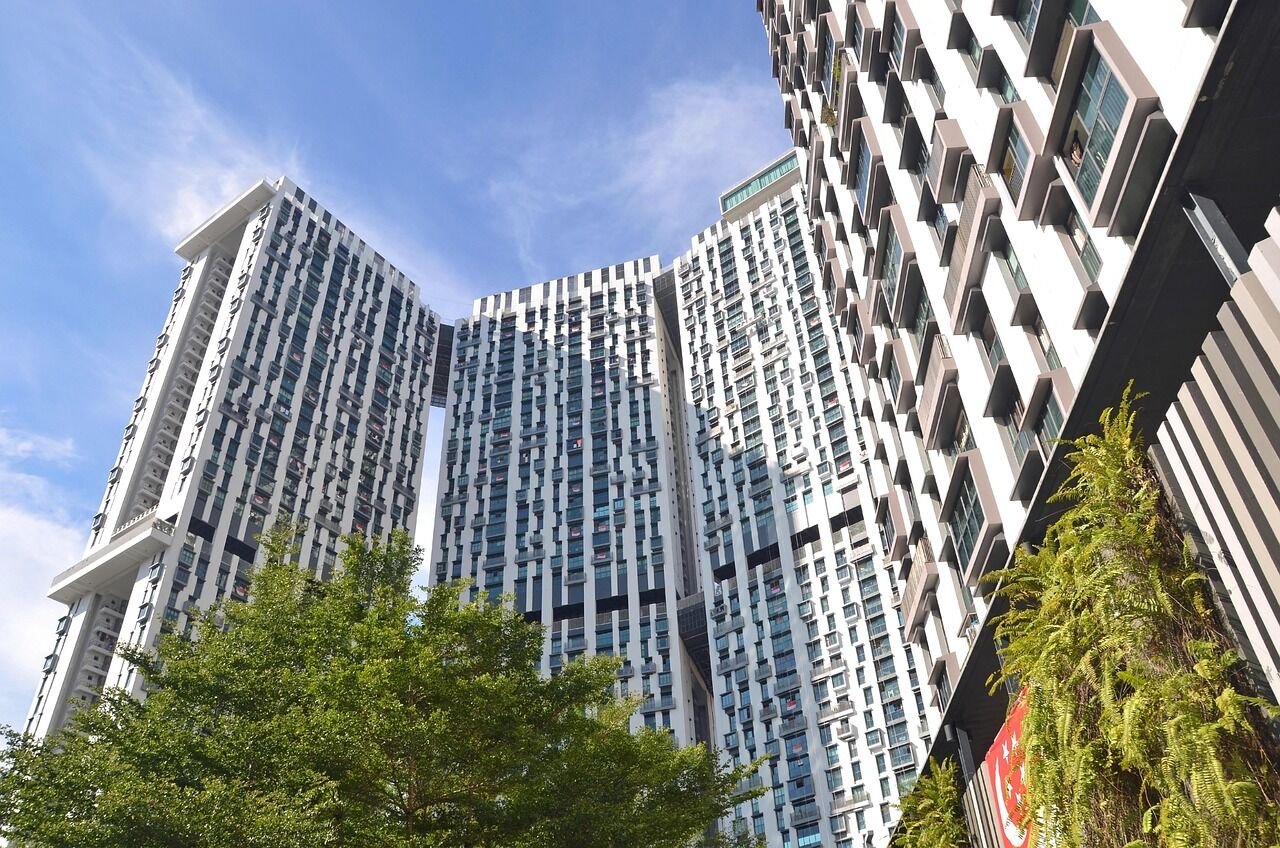
Kuala Lumpur’s condo rental market remains one of the most closely watched segments by property investors in Malaysia. Between shifting tenant preferences, new MRT lines, and changing work patterns, understanding where demand is strongest and which areas offer reasonable yields is essential before committing to a purchase.
This article walks through current rental demand patterns in KL, how to evaluate rental yield and ROI using realistic figures, and how key neighbourhoods like KLCC, Mont Kiara, Bangsar, Cheras, Setapak and Desa ParkCity compare from an investment-rental perspective.
Understanding Rental Demand in Kuala Lumpur
Rental demand in Kuala Lumpur is shaped by three main forces: employment hubs, connectivity, and lifestyle appeal. Areas with strong links to office clusters, universities, and international schools tend to see more resilient tenant demand, even when overall market conditions soften.
In the city centre, KLCC and its surroundings attract a mix of expats, senior professionals, and corporate tenants. Outside the core, Mont Kiara and Desa ParkCity draw higher-income families and expats who prioritise international schools and lifestyle facilities. In more mass-market locations such as Cheras and Setapak, demand is driven by local professionals and students looking for value and good public transport access.
Connectivity is often the deciding factor for tenants choosing between similar units. Condos within walking distance of LRT/MRT or with direct highway access (DUKE, SPRINT, MRR2, Federal Highway) typically enjoy lower vacancy rates and more consistent enquiries compared to similar projects in less accessible pockets.
Key Tenant Profiles in KL’s Rental Market
Different areas within Kuala Lumpur cater to distinct tenant profiles, and this directly affects achievable rent, turnover, and the type of unit that performs best.
KLCC: Corporate Tenants and High-Income Expats
KLCC is dominated by high-rise condominiums targeting senior executives, expats, and corporate leases. Units here tend to be larger, with facilities aimed at higher-budget tenants: concierge services, full facilities, and premium security are standard.
Typical tenants work in nearby Grade A offices along Jalan Ampang, Jalan Sultan Ismail, and within the KLCC-Bukit Bintang corridor. Accessibility via LRT (KLCC station) and covered walkways to offices is a major draw.
Rental demand is relatively stable, but rental yields in KLCC are often moderate because purchase prices are high compared to achievable rents. Investors usually prioritise capital preservation and prestige over maximising yield in this location.
Mont Kiara: Expat Families and International School Communities
Mont Kiara has a strong concentration of expat families, largely due to the cluster of international schools and its “suburban within the city” feel. Units are typically large, with generous facilities, and many family-friendly layouts from 1,200 sq ft upwards.
Accessibility is mainly via major roads and highways like SPRINT, DUKE and NKVE rather than rail. Tenants often own cars and focus more on school and lifestyle proximity than public transport.
Rental demand is supported by continual inflow of expats with schooling needs, but competition among condo projects is high. Well-maintained and upgraded units in reputable developments tend to secure longer leases and better tenants.
Bangsar: Young Professionals and Upscale Urban Tenants
Bangsar appeals to young professionals, small families, and some expats who value café culture, nightlife, and closeness to Mid Valley and KL Sentral. The area offers a mix of older but spacious condos and newer lifestyle-focused developments.
Accessibility is good via LRT (Bangsar and Abdullah Hukum stations) and highways like Federal Highway and NPE. The combination of lifestyle amenities and connectivity supports solid demand for well-located units.
Bangsar rentals can achieve competitive yields for older, moderately priced condos, especially if units are nicely renovated and positioned near LRT or main commercial strips like Telawi.
Cheras: Mass-Market Professionals and Families
Cheras is a large, diverse market catering mainly to local professionals and families looking for value. Newer condos near MRT stations (such as along the Sungai Buloh–Kajang line) have improved the rental appeal of certain pockets.
Tenants generally prioritise practical factors: commuting time to the city, access to shopping malls, and rental affordability. Units close to MRT stations like Taman Mutiara or Maluri command stronger interest.
Because entry prices are comparatively lower, Cheras can offer more attractive gross yields, especially for smaller units with efficient layouts and basic but functional furnishings.
Setapak: Students and Entry-Level Professionals
Setapak’s rental market is heavily influenced by its proximity to universities and colleges, especially Tunku Abdul Rahman University of Management and Technology (TAR UMT). Student tenants dominate in certain projects, while nearby condos also attract entry-level professionals working in the city.
Connectivity via DUKE and MRR2, plus access to LRT Wangsa Maju and Sri Rampai, supports demand from commuters. Units that are simple, durable, and easy to maintain usually fare best with student tenants.
Setapak often offers some of the higher rental yields in KL, but investors must be comfortable with higher tenant turnover and more active management due to the student demographic.
Desa ParkCity: Affluent Families and Long-Term Tenants
Desa ParkCity is positioned as a master-planned, family-friendly township with strong lifestyle branding. Tenants are typically upper-middle income families and some expats, drawn by the township’s parks, retail village, and security.
Accessibility is primarily via highways like LDP and DUKE, with limited direct rail connectivity. However, many tenants in this segment accept car dependency in exchange for a more private, lifestyle-driven environment.
Rental yields can be modest due to relatively high purchase prices, but tenant stickiness is often better than average, with families staying multiple years if they are satisfied with the neighbourhood and schools.
How to Evaluate Rental Yield and ROI in KL
For Kuala Lumpur condos, most investors focus on gross rental yield first, then refine their assessment using net yield and realistic cost assumptions. Over-optimistic rent or under-estimating expenses can distort the true performance of an investment.
Gross rental yield is the annual rent divided by purchase price. Net yield subtracts key costs such as maintenance fees, quit rent, assessment tax, agent fees, and basic repairs before dividing by the purchase price.
In KL’s current market, realistic gross yields for condos generally range from around 3% to 6%, depending on area, property type, and pricing. Higher yields tend to occur in more affordable, non-prime locations with strong rental demand, while premium areas show lower but sometimes more stable yields.
Practical Example of Gross and Net Yield
Consider a mid-range condo unit in Cheras purchased at RM600,000. The monthly rent is RM2,400 furnished.
Annual rent = RM2,400 × 12 = RM28,800. Gross yield = RM28,800 ÷ RM600,000 = 4.8%.
If annual costs are RM6,000 (maintenance and sinking fund), RM800 (assessment and quit rent), and RM1,500 (average annual repairs), net income is RM28,800 − RM8,300 = RM20,500. Net yield = RM20,500 ÷ RM600,000 ≈ 3.4%.
Key Costs KL Investors Should Consider
- Monthly maintenance and sinking fund (higher for projects with extensive facilities in KLCC, Mont Kiara, Desa ParkCity)
- Furnishing and appliance replacement every few years, especially in student-heavy or high-turnover areas like Setapak
- Vacancy periods between tenancies; one to two months vacancy between leases is common in many KL neighbourhoods
- Agent fees for tenant sourcing and renewals, typically equivalent to a portion of one month’s rent
- Minor renovations or touch-ups to remain competitive with newer nearby projects
“In Kuala Lumpur’s rental market, consistent tenant demand often matters more than achieving the highest possible rent.”
Comparing Rental Performance Across KL Areas
Different parts of Kuala Lumpur deliver very different rental profiles. Some areas offer higher yields but require more hands-on management, while others provide more stable tenancies at lower returns.
The following table gives a simplified, illustrative snapshot of how several KL areas may compare from a rental perspective, based on typical condo units targeting mainstream tenants:
| Area | Rental Demand | Typical Tenant | Estimated Gross Yield Range |
|---|---|---|---|
| KLCC | Moderate to strong, but competitive | Corporate expats, senior professionals | 3.0% – 4.0% |
| Mont Kiara | Consistent, family-oriented | Expat families, higher-income locals | 3.0% – 4.5% |
| Bangsar | Strong in well-located pockets | Young professionals, small families | 3.5% – 5.0% |
| Cheras | Broad-based, value-driven | Local professionals, families | 4.0% – 5.5% |
| Setapak | High near universities | Students, entry-level professionals | 4.5% – 6.0% |
| Desa ParkCity | Stable, family-centric | Affluent families, some expats | 3.0% – 4.0% |
These ranges are indicative only; actual yields depend heavily on purchase price, project quality, and unit condition. Buying below prevailing market value or choosing an underpriced but well-located unit can materially improve yield in any area.
Accessibility, Lifestyle, and Vacancy Risk
Within each neighbourhood, micro-location plays a major role. A condo 5–10 minutes’ walk from an LRT/MRT station in Cheras or Setapak may achieve much faster tenant take-up compared to a similar unit that requires two bus rides.
In KLCC and Bangsar, covered walkways, proximity to malls, and ease of access to major offices are decisive. Tenants may choose a slightly older building if it offers better walking routes or avoids heavy traffic bottlenecks.
Lifestyle offerings also affect vacancy. Mont Kiara and Desa ParkCity benefit from self-contained retail and F&B, which helps retain tenants who value convenience and community. In contrast, purely residential clusters with limited nearby amenities may face higher churn, especially as more integrated developments come onto the market.
Airbnb vs Long-Term Rental in Kuala Lumpur Condos
Some KL investors consider short-stay platforms like Airbnb as an alternative to conventional one- or two-year tenancies. Short-stay can generate higher gross monthly income in the right location, but it comes with additional risks, regulations, and operational demands.
In Kuala Lumpur, not all condos allow short-term rentals. Many management bodies in KLCC and Mont Kiara have tightened rules due to security and nuisance concerns. Even where allowed, there may be registration requirements or extra charges.
Operationally, short-stay hosting in KL requires active involvement: managing check-ins, cleaning, guest communication, and reviews. It may also be more sensitive to tourism cycles and external shocks compared with long-term leases, which rely more on the local working and student population.
Practical Tips to Improve Rental Performance
Aside from choosing the right area, investors in Kuala Lumpur can take practical steps to improve their rental outcomes. These actions often cost less than a full renovation but can increase appeal and reduce vacancy.
First, focus on functional, neutral furnishings. Tenants in Bangsar, Cheras, and Setapak often prioritise practicality and value over designer finishes, while expat tenants in Mont Kiara and Desa ParkCity look for overall comfort, storage, and quality appliances.
Second, ensure strong online listings. Clear photos, accurate descriptions, and competitive pricing relative to similar units in the same project are crucial. Units priced slightly below the top of the market for that condo often secure tenants faster while maintaining reasonable yield.
Frequently Asked Questions
1. What rental yield should I realistically expect for a KL condo?
In today’s Kuala Lumpur market, most condo investors can expect gross yields in the range of about 3% to 6%, depending on location, project type, and entry price. Prime areas like KLCC and Desa ParkCity generally sit at the lower end of that range, while more affordable, high-demand areas such as Setapak and certain parts of Cheras may reach the higher end.
However, after accounting for maintenance fees, taxes, and vacancies, net yields will be lower. It is prudent to run your numbers using conservative rent and realistic cost assumptions, rather than assuming the highest asking rents in listings.
2. Which areas in Kuala Lumpur have the strongest tenant demand?
Tenant demand is strong in locations close to employment hubs, universities, and reliable transport. KLCC, Bangsar, and parts of Mont Kiara remain popular with working professionals and expats, while Setapak sees strong demand from students and young workers.
In Cheras, pockets near MRT stations attract steady interest from local professionals and families. Desa ParkCity’s demand is more niche but stable, driven by families who prioritise the township environment and are willing to pay a premium for it.
3. Is Airbnb or short-term rental better than long-term rental in KL?
Short-term rental can sometimes generate higher gross income, particularly in tourist-friendly or central locations, but it comes with more active management, potential regulatory changes, and higher operating costs.
Long-term rentals in Kuala Lumpur typically offer more predictable cash flow and lower day-to-day involvement. For many investors, especially those not based in KL, a well-managed long-term tenancy is easier to sustain, while short-stay strategies are better suited to owners with the capacity to handle operations or engage a specialised manager.
4. What are the main risks of investing in a rental condo in Kuala Lumpur?
Key risks include oversupply in certain condo segments, which can pressure rents and increase vacancy, especially in parts of KLCC and Mont Kiara where many similar units compete for the same tenant pool.
Other risks involve changes in economic conditions affecting expat hiring, potential new regulations around short-term rentals, and the launch of new competing projects that may draw tenants away. Maintenance fee increases over time can also impact net yield if they rise faster than achievable rents.
5. Are student-focused rentals in Setapak too risky?
Student-focused rentals in Setapak can offer higher yields but require comfort with higher turnover and more active management. You may face more frequent wear and tear, shorter leases, and the need to secure new tenants each academic year.
To manage the risk, some investors choose slightly larger or better-specified units that can appeal both to students and young professionals, broadening the potential tenant base. Ensuring the unit is within convenient distance of both campus and LRT can help sustain demand.
This article is for educational and market understanding purposes only and does not constitute financial, property, or investment advice.
🏙️ Explore Kuala Lumpur Properties
- New Condo Projects in Kuala Lumpur
- Condo for Sale in Kuala Lumpur
- Condo for Rent in Kuala Lumpur
- Landed Homes & Shop Lots for Sale
- Browse Properties by Area
- Property Buying Guides & Tips
- Find Property Agents
- Find Homeowner Insurance Agent
📍 Browse Properties by Location
- Property in KLCC
- Property in Mont Kiara
- Property in Bangsar
- Property in Sri Hartamas
- Property in Bukit Jalil
- Property in Cheras
- Property in Setapak
- Property in Petaling Jaya
- Property in Subang Jaya
⚠️ Disclaimer
The information provided in this article is for general educational and informational purposes only. While we strive to keep property information accurate and up to date, availability, pricing, specifications, and promotions may change without prior notice.
This content should not be considered legal, financial, investment, or mortgage advice. Readers are encouraged to verify all information directly with property developers, property owners, licensed real estate agents, financial institutions, or relevant authorities before making any purchasing or rental decisions.
KLCondo.com.my is an independent property information platform and is not responsible for any losses arising from the use of information published on this website.
