
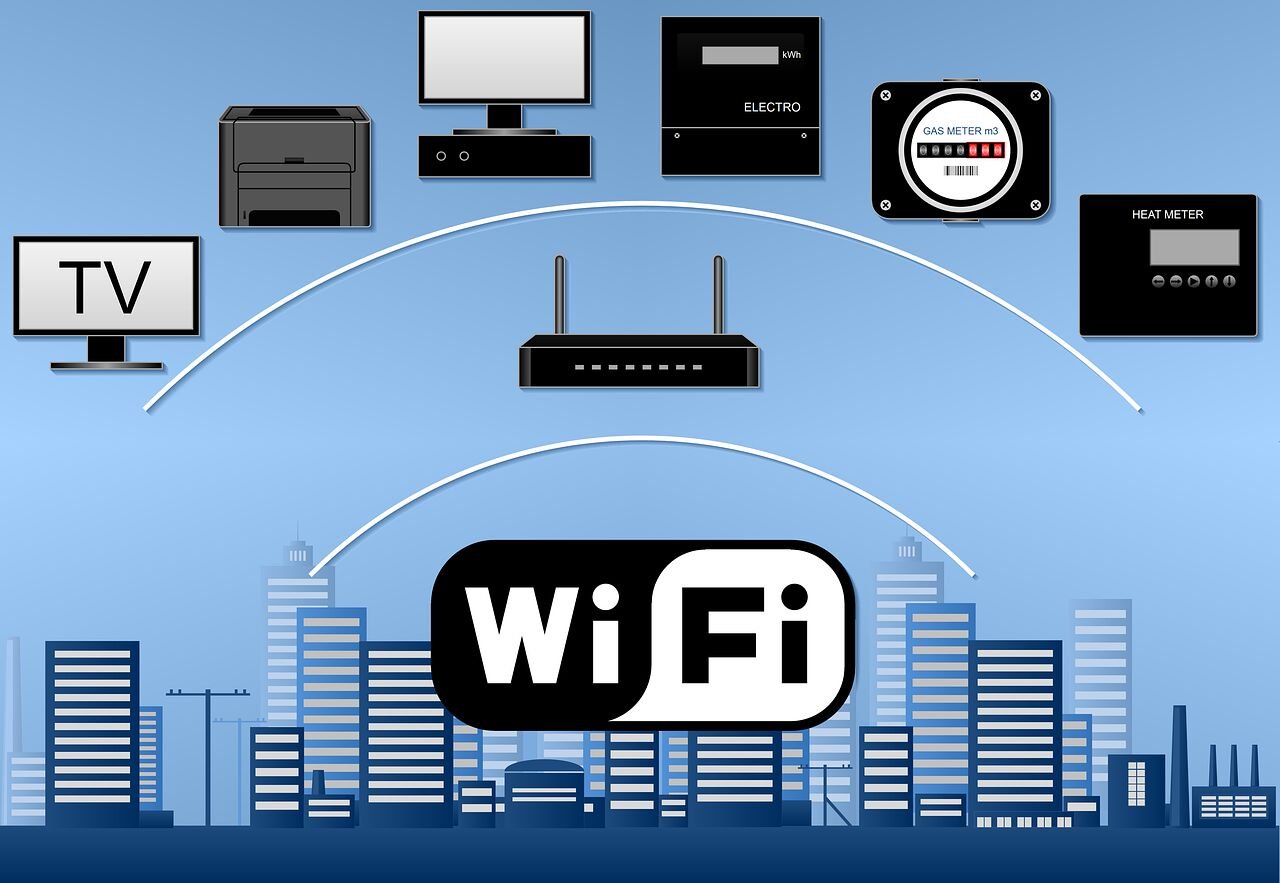
Home Internet and WiFi Guide for Malaysian Condos, Apartments and Landed Homes
Choosing home internet in Malaysia is no longer just about picking the plan with the biggest number. A 1Gbps fibre package may look attractive, but if your router is placed behind a TV cabinet, your condo has thick concrete walls, or your home office is upstairs far from the modem, your real experience may still feel slow.
For KLCondo.com.my readers, the important question is not simply “What is the fastest internet plan?” but “What internet and WiFi setup actually suits my home, devices, layout and usage?”
This guide explains fibre broadband, 5G home broadband, WiFi performance, routers, Mesh WiFi, extenders, Ethernet, speed tests and practical checks before signing a broadband contract. It is written for residents of condos, apartments, townhouses, terrace houses, semi-Ds, bungalows, rental units and home offices in Malaysia.
Internet Service vs WiFi: They Are Not the Same Thing
One of the most common misunderstandings is thinking that “internet speed” and “WiFi speed” are the same. They are connected, but they are not the same.
Your internet service is the connection provided by your broadband provider, such as fibre broadband or 5G home broadband. This determines the maximum speed coming into your home, subject to network conditions, plan limits, equipment and other factors.
Your WiFi is the wireless network created inside your home by your router or Mesh WiFi system. WiFi performance depends on router quality, wall thickness, distance, interference from neighbours, device capability and where the router is placed.
Practical tip: If your fibre plan is fast but your room still has weak signal, upgrading the broadband plan may not solve the problem. You may need better WiFi coverage, not more internet speed.
How Much Internet Speed Do You Realistically Need?
Many households overestimate the speed they need and underestimate the importance of WiFi coverage and stability. A small household that mainly streams Netflix, uses WhatsApp, browses websites and attends occasional video calls may not need the highest-speed plan. A larger household with multiple 4K streams, gaming, cloud backups, CCTV, smart home devices and work-from-home users may benefit from a faster and more stable connection.
Understanding Download Speed
Download speed affects activities such as streaming videos, browsing websites, downloading apps, watching YouTube, using Netflix, updating games and loading cloud files. This is the speed most broadband plans advertise prominently.
For many homes, download speed is important, but it is not the only factor. If your WiFi coverage is poor, even a high download speed package can feel slow in bedrooms, study rooms or upstairs areas.
Understanding Upload Speed
Upload speed matters when you send data out from your home. This includes video calls, uploading documents, backing up photos, livestreaming, sending large files, using cloud storage and operating some smart home security systems.
Home office users, online sellers, designers, content creators and households with frequent video meetings should pay attention to upload speed, not only download speed.
Understanding Ping, Latency and Jitter
Ping and latency refer to how quickly data travels between your device and a server. Lower latency is usually better for online gaming, video calls and real-time applications.
Jitter means variation in latency. If jitter is high, your video call may freeze or your online game may feel unstable even when the speed test shows a decent download speed.
For casual browsing and streaming, latency may be less noticeable. For gaming, remote work, online meetings and cloud applications, stable latency can matter as much as raw speed.
Typical Household Usage: What to Consider
Instead of choosing a plan based only on advertised Mbps, consider how your household actually uses the internet.
- Small household: Browsing, social media, HD streaming and light work-from-home usage may not require the highest-speed plan.
- Family with multiple users: Simultaneous streaming, gaming, online classes and video calls may need higher speed and better router performance.
- Home office: Upload speed, low latency, Ethernet connection and reliable WiFi coverage are important.
- Smart home users: CCTV, smart speakers, robot vacuums, smart TVs and IoT devices require stable coverage throughout the home.
- Gamers: Low latency, stable connection and Ethernet are often more important than simply buying the fastest plan.
- Rental property: Check contract terms carefully, especially if you may move before the contract ends.
Why WiFi Can Be Slow Even with Fast Fibre
If you subscribe to a fast fibre plan but your phone or laptop still gets weak speeds, the problem may be inside your home network rather than the fibre line itself.
Common reasons include poor router placement, older router technology, thick walls, interference from neighbouring networks, too many connected devices, outdated laptops or phones, and using WiFi in a far corner of the unit.
In Malaysian condos and apartments, neighbouring WiFi networks can create congestion, especially in dense developments. Your router may be competing with dozens of nearby routers using similar channels. In landed homes, the main problem is often coverage across multiple floors or large floor areas.
How Property Layout Affects WiFi Performance
Condos and Apartments
Condos and apartments can be challenging for WiFi because of concrete walls, structural columns, doors, mirrors, built-in cabinets and neighbouring networks. Even a compact unit may have dead zones if the router is hidden near the entrance or placed inside a TV console.
Many fibre termination points are installed near the living room or entrance. This is convenient for installation but not always ideal for full-home coverage. A bedroom at the far end of the unit may receive weaker 5GHz signal, especially if there are several walls in between.
Residents should also consider building management restrictions. Some condos may have rules regarding installation routes, drilling, riser access or external cabling. Before signing up for fibre, check whether your preferred provider is available in the building and whether installation approval is required.
Landed Homes
Terrace houses, semi-Ds and bungalows often face a different issue: space. A single router may not cover both floors properly, especially if the router is downstairs and the bedrooms or home office are upstairs.
Double-storey layouts, thick walls, staircases, kitchens, outdoor areas and extensions can weaken WiFi. For larger landed homes, Mesh WiFi or Ethernet cabling may be more practical than relying on one powerful router.
If possible, using Ethernet backhaul for Mesh WiFi can greatly improve stability. This means connecting Mesh nodes using LAN cables instead of relying only on wireless communication between nodes.
2.4GHz vs 5GHz: Which WiFi Band Should You Use?
Most modern routers offer at least two WiFi bands: 2.4GHz and 5GHz.
2.4GHz travels further and passes through walls better, but it is usually slower and more crowded. It is useful for smart home devices, older devices and areas farther from the router.
5GHz is faster and less congested, but it has shorter range and does not penetrate walls as well. It is better for streaming, gaming, video calls and laptops or phones used near the router.
In practical terms, if you are close to the router, 5GHz is usually preferable. If you are far away or behind multiple walls, 2.4GHz may be more stable, though slower.
WiFi 5, WiFi 6, WiFi 6E and WiFi 7 Explained Simply
WiFi standards describe the technology generation used by routers and devices. A newer standard can improve performance, especially when many devices are connected, but both your router and device must support the standard to get the full benefit.
| WiFi Standard | What It Means | Suitable For | Things to Consider |
| WiFi 5 | Older but still common standard using mainly 5GHz | Basic streaming, browsing, smaller households | May struggle with many devices or high-speed plans |
| WiFi 6 | Improved efficiency, especially with multiple devices | Most modern homes, condos and work-from-home users | Good balance of performance and value |
| WiFi 6E | Adds access to 6GHz band on supported devices | Users with compatible devices needing cleaner wireless channels | 6GHz range is shorter and device support is still limited |
| WiFi 7 | Newest generation with higher potential speeds and advanced features | Tech-heavy homes, future-proofing, premium setups | More expensive and benefits depend on compatible devices |
For many Malaysian households today, a good WiFi 6 router or Mesh WiFi system is already a practical upgrade. WiFi 6E and WiFi 7 may be useful for advanced users, but they are not automatically necessary for every condo or house.
When Does a Better Router Make Sense?
A router upgrade can make sense if your current router is old, unstable, lacks coverage, cannot handle many devices, has limited Ethernet ports, or does not support newer WiFi standards.
However, the most expensive router is not always the best choice. A router with very high advertised speed may still perform poorly if placed in the wrong location or used in a home with many walls.
When comparing routers, look at coverage, WiFi standard, number of supported devices, Ethernet ports, ease of setup, parental controls, security updates and value for money. Also check whether your broadband provider requires specific settings or supports your preferred router model.
Mesh WiFi vs WiFi Extender: Which One Is Better for Your Home?
Mesh WiFi and WiFi extenders both aim to improve coverage, but they work differently.
A WiFi extender repeats the existing signal from your router. It can be affordable and useful for fixing a small dead zone, but performance may drop because the extender relies on receiving and rebroadcasting the signal.
A Mesh WiFi system uses multiple nodes designed to work together under one network name. It is usually smoother for larger homes, double-storey houses and units with multiple dead zones.
| Option | Best For | Advantages | Limitations |
| WiFi Extender | Small dead zone, budget fix, one problematic room | Lower cost, easy to add, suitable for light use | May reduce speed, placement is sensitive, not ideal for many dead zones |
| Mesh WiFi | Larger condos, double-storey homes, multiple rooms, many devices | Better roaming, wider coverage, easier whole-home management | Higher cost, needs proper node placement, best with Ethernet backhaul |
If your bedroom has weak signal but is still close to the router, an extender may be enough. If your whole upstairs area is weak, or your condo has several dead zones, Mesh WiFi is usually a more complete solution.
Router and Mesh Placement Tips
Placement can make a bigger difference than many people expect. Avoid putting your router inside a cabinet, behind a TV, on the floor, near large metal objects, next to thick walls or beside appliances that may create interference.
For condos, a central and open location is usually best. If the fibre point is at the entrance, consider whether Ethernet cabling to a more central location is possible. For landed homes, placing one Mesh node upstairs and one downstairs can be more effective than trying to force one router to cover everything.
Mesh nodes should not be placed too far apart. If a node receives a weak signal from the main router, it may simply rebroadcast a weak connection. A good rule is to place Mesh nodes halfway between the router and the weak area, not inside the dead zone itself.
Ethernet: Still the Most Reliable Connection
WiFi is convenient, but Ethernet is still the most reliable option for fixed devices. If you have a desktop PC, gaming console, smart TV, network storage or home office workstation, connecting by LAN cable can improve stability and reduce latency.
Ethernet is also useful for Mesh WiFi backhaul. In a renovated condo or landed home, planning LAN points can make a big difference to long-term connectivity. For rental properties, visible cabling may not be ideal, so discuss with the landlord before installing permanent cables.
Fibre Broadband vs 5G Home Broadband
Fibre broadband is generally the preferred option for stable home internet when available. It uses a fixed line connection and is suitable for families, streaming, gaming, work-from-home and heavy usage.
5G home broadband can be useful where fibre is unavailable, installation is difficult, or the user needs a more flexible setup. However, 5G performance can vary depending on location, indoor signal strength, network congestion, building materials and placement of the 5G router.
For condos, high floors or units blocked by surrounding buildings may experience different 5G signal quality. For landed homes, placing the 5G router near a window may help, but results are not guaranteed. Always check coverage and terms from the provider before committing.
How to Compare Broadband Plans in Malaysia
When comparing broadband plans such as TIME, Unifi, Maxis Fibre, CelcomDigi Fibre or other available providers, do not look only at the advertised speed. Availability differs by property, especially in condos where certain providers may or may not have infrastructure in the building.
Consider the monthly fee, normal price after any promotion, contract length, installation charges, included router, upload speed, customer support options, relocation policy, termination fees and whether the plan includes additional services such as TV packs or mobile bundles.
Promotional pricing should be treated carefully. A plan may look cheaper during the first few months but revert to a different normal monthly price later. Always confirm the latest official plan details directly with the provider before signing up.
What to Check Before Signing a Broadband Contract
- Availability: Confirm whether the provider supports your exact condo, apartment or landed address.
- Building approval: For condos, check whether management approval or installation appointment coordination is needed.
- Contract period: Many plans involve a contract. Check the commitment period before subscribing.
- Relocation policy: Important for tenants or owners who may move soon.
- Termination fees: Understand the cost if you cancel early.
- Router provided: Check whether the included router is suitable for your home size and number of devices.
- Normal price: Distinguish between promotional pricing and the usual monthly fee.
- Upload speed: Important for work-from-home, cloud backups and video calls.
- Installation limitations: Ask about drilling, cable routes and fibre point placement.
How to Perform a Useful Speed Test
A speed test can help you understand your connection, but one result does not prove that an ISP is always good or bad. Results vary depending on device, WiFi signal, server location, time of day and network conditions.
For the most accurate test of your broadband line, connect a laptop or desktop directly to the router using an Ethernet cable. Close background downloads, pause cloud backups and make sure other users are not streaming or gaming during the test.
Testing over WiFi can still be useful, but it measures both your internet and your WiFi quality. If your Ethernet speed is good but your bedroom WiFi speed is poor, the issue is likely WiFi coverage rather than the fibre line.
Server location also matters. A nearby Malaysian server may show lower latency and higher speed than a faraway overseas server. For gaming or work applications hosted overseas, international routing may affect real-world performance.
When reading a speed test, remember:
- Download speed shows how quickly your device receives data.
- Upload speed shows how quickly your device sends data.
- Ping or latency shows response time.
- Jitter shows how consistent the response time is.
- WiFi speed tests can be affected by walls, distance, interference and device quality.
Common Home Connectivity Problems and Practical Fixes
Problem: Fast Plan, Slow Bedroom WiFi
This usually indicates
🏙️ Explore Kuala Lumpur Properties
- New Condo Projects in Kuala Lumpur
- Condo for Sale in Kuala Lumpur
- Condo for Rent in Kuala Lumpur
- Landed Homes & Shop Lots for Sale
- Browse Properties by Area
- Property Buying Guides & Tips
- Find Property Agents
- Find Homeowner Insurance Agent
📍 Browse Properties by Location
- Property in KLCC
- Property in Mont Kiara
- Property in Bangsar
- Property in Sri Hartamas
- Property in Bukit Jalil
- Property in Cheras
- Property in Setapak
- Property in Petaling Jaya
- Property in Subang Jaya
⚠️ Disclaimer
The information provided in this article is for general educational and informational purposes only. While we strive to keep property information accurate and up to date, availability, pricing, specifications, and promotions may change without prior notice.
This content should not be considered legal, financial, investment, or mortgage advice. Readers are encouraged to verify all information directly with property developers, property owners, licensed real estate agents, financial institutions, or relevant authorities before making any purchasing or rental decisions.
KLCondo.com.my is an independent property information platform and is not responsible for any losses arising from the use of information published on this website.
